I hear a lot of brands talking about their community when what they actually mean is their audience.
It's an easy mix up. Both involve people, both live on social media, and both can look busy from the outside. But they're not the same thing, and confusing the two is costing brands more than they realise.
An audience watches you. A community belongs with you.
One gives you reach; the other gives you loyalty, trust and the kind of word of mouth no ad budget can buy.
I've been building and nurturing communities - online and in real life - since 2012. In that time I've seen the difference play out again and again. So I want to break it down properly: what separates an audience from a community, why it matters more now than ever, and how to tell which one you're actually building.
Why brand community matters more than ever
During the pandemic, social media and online groups became a lifeline. We were at home, we were isolated, and connecting online was often the only option. But as things settled over the next few years, many of us realised something: gathering online isn't the same as feeling connected.
A lot of what brands had been calling community was really marketing to an audience.
People noticed. They became more selective about where they spent their time and attention. More of us started lurking: watching quietly, not joining in. Partly that's overwhelm, and partly it's because we can tell when we're being treated as a source of clicks and sales rather than as people.
Now add AI to the mix… Brands can produce more content, faster and cheaper than ever before. Feeds are full of it, and the more generic content there is, the less people trust any of it.
That's why the difference between audience and community has stopped being a nice nuance. When trust is hard to earn, community is where it gets built.
The 4 big differences between Audience and Community
The differences between audience and community can be subtle, and sometimes they're more obvious. Here's how I break them down.
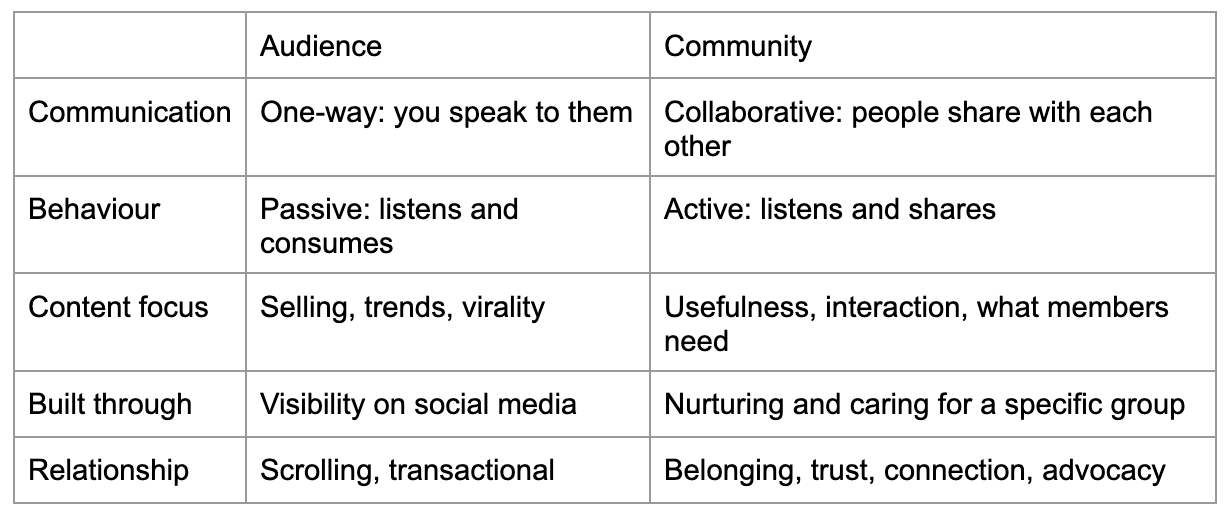
1. Who's talking: one-way vs. collaborative
You speak to an audience. The communication runs mostly one way: you post, they receive.
A community is collaborative. It's built on people sharing with each other, not just hearing from you. The brand is part of the conversation, not the only voice in it.
2. What people do: consume vs. share
An audience listens and consumes. It's more passive: people scroll, watch, maybe like, and move on.
A community listens and shares: experiences, insights, advice and guidance. It's active. Members help each other, and the value comes from them as much as from you.
3. What the content is for: selling and virality vs. usefulness and need
Content aimed at an audience tends to prioritise selling, and it chases trends and virality to stay visible.
Content for a community prioritises what's genuinely useful and what members actually need. It invites interaction and knowledge-sharing rather than a quick reaction.
4. What it builds: visibility vs. belonging
Being visible on social media builds an audience. Audience relationships are transactional: people scroll, and they buy if an offer catches their eye.
Nurturing and caring for a specific group of people builds a community. That's where you find belonging, trust, connection and, eventually, advocacy.
Audience vs Community at a glance:
What this looks like in real life
When I was managing the social community for Gü desserts, the first sign our audience was becoming a community was when the same names kept popping up in my comment notifications.
They were excited about new products and commented on posts about desserts they’d tried. They even started answering other customer’s questions and giving recommendations. That’s brand advocacy happening all on its own.
We built relationships with these people through genuine conversations in comments and DMs. We showed an interest in them, occasionally sent them goodies, and let them know first about activities we thought they’d love.
The confirmation of community factors were that they stayed, participated, belonged and they advocated for the brand. They trusted us and our products, which is why they kept coming back. Hearing their excitement about new launches, and watching them share their experiences with others, was wonderful.
None of that came from going viral, it came from noticing people and treating them like people.
Why community is good for business
This isn't just about warm feelings - community has a genuine commercial role. Winning a new customer is expensive, once you've done the hard work of bringing someone in, the question is whether they stay. An audience can be large and still quietly drift away. A community gives people reasons to stick around: they feel seen, they get value from other members, and they feel part of something.
And people who feel that way talk. When customers trust you and feel connected to what you've built, they recommend you to friends, colleagues and family. They say good things about your brand when you're not in the room.
I call that good gossip. It's the marketing your Facebook Ads Manager can't buy. You can pay to put your brand in front of people, but you can't pay people to care enough to talk about you.
Word of mouth isn't something you can force. It's a natural result of belonging.
Quick check: do I have an audience or a community?
If you're not sure which one you've got, ask yourself these questions:
Do members talk to each other, or only to you? If every comment is a reply to the brand, you have an audience.
When did someone last share something unprompted? A tip, a win, a question for the group. Communities generate their own conversations.
Is most of your content selling, or helping? Count your last 10 posts.
Are you measuring reach, or relationships? Follower numbers tell you about visibility, not belonging.
Would your members notice if you disappeared? And would they miss each other, not just your offers?
If you answered mostly the first way, that's okay, most brands start with an audience. The opportunity is to start nurturing the relationships that turn it into something more.
The bottom line: build a brand community, not just an audience
Attention gets people through the door. Belonging gives them a reason to stay.
There's nothing wrong with having an audience; every community starts as one. But if you want loyalty, trust and people who'll recommend you without being asked, you have to go further than visibility. You have to nurture the relationship.
Community is a relationship you nurture, not an audience you engage.
If you'd like to talk about turning your audience into a community people want to belong to, let’s build something real. Email me to get started.
.